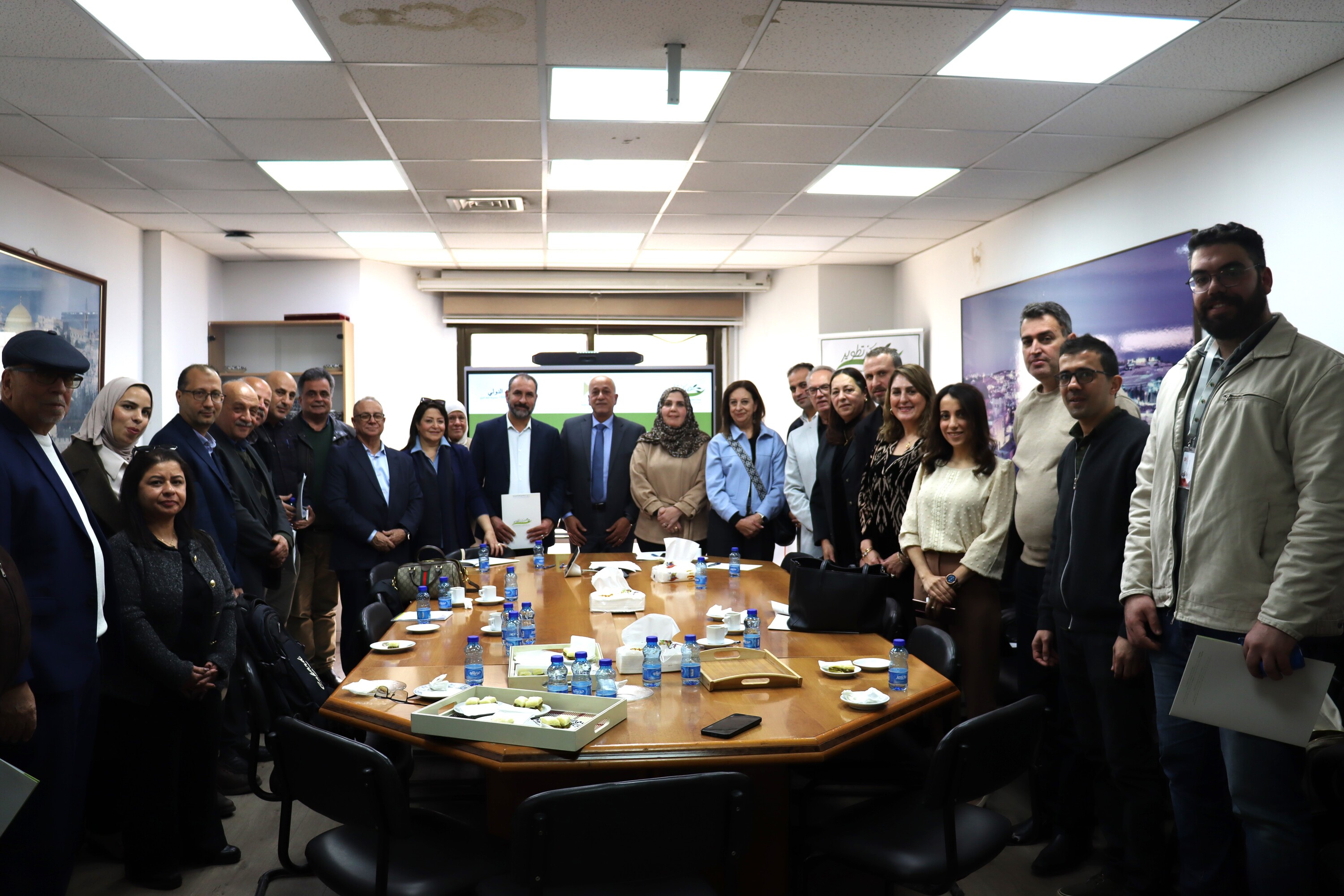
Jerusalem- February 2, 2026, The NGO Development Center (NDC) signed grant implementation agreements today with 11 civil society organizations for a total amount of USD 9.2 million. The funding falls under the “Support to Women and the Disabled” component of the “The West Bank and Gaza Social Recovery and Job Creation Project” funded by the World Bank, through the Ministry of Finance and Planning.
The signing was held at NDC’s main office in Al-Ram, attended by representatives from the eleven implementing partners. These included the Applied Research Institute – Jerusalem (ARIJ) / Society, Rural Women Development Society (RWDS), Palestinian Heritage Trail (PHT), Bethlehem Arab Society for Rehabilitation (BASR), QADER for Community Development, the Palestinian Business Women's Association (ASALA), Economic & Social Development Center of Palestine (ESDC), Land Research Center (LRC), MA'AN Development Center, the Agriculture Development Association – PARC, and Partners for Sustainable Development – PSD.
The funded projects focus on a comprehensive range of productive and service sectors that support sustainable livelihoods, including organic and traditional agriculture, food and agricultural manufacturing, handicrafts and traditional home-made products, in addition to embroidery, beauty products, and salons. They also extend to include home-made products in rural areas, such as eco-friendly products, home farming, e-commerce, as well as small and medium-sized enterprises. Their scope also includes activities such as tourism, agriculture, marketing services, embroidery, accessories making, sales points, service and maintenance shops, all of which promote local development and support rural and women economy.
In his welcoming remarks, Mr. Ghassan Kasabreh expressed his deep gratitude for the generous support provided by the World Bank and the Ministry of Finance and Planning. He also commended NDC’s collaboration with the eleven civil society organizations, each bringing diverse competencies and expertise in supporting women and persons with disability in the Palestinian job market. Mr. Ghassan Kasabreh emphasized that the project selection process was guided by clear criteria and marked by strong competition, underscoring the urgent need for Palestinian CSOs to respond to the growing demands of the labor market.
In her remarks, Ms. Tahani Madhoun, SRJCP Project Manager from the Ministry of Finance and Planning emphasized the importance of this project which falls under the strategic vision of the Palestinian government to enhance social recovery, job creation, and improve economic revitalization.
She added that these agreements represent an important step to support civil society organizations to implement projects for women and persons with disability, especially with the hard economic situation the Palestinian society is going through and which affects women and persons with disability the most.
At the end of her speech, Madhoun reiterated that the next stage of the project will see the surge of new job opportunities, quality services and sustainable initiatives aiming at empowering women and persons with disabilities.
The project aims to promoting community resilience and well-being through short-term work opportunities for the unemployed and enhancing employment for women and persons with disabilities; contributing to local economic revival as a result of gained wages and implemented projects, contributing to developing transferable skills and employment capacities, particularly among women and persons with disabilities; and enhancing the operational capacity of the MoFP and other key line ministries.
The project is comprised of four main components: Labor Intensive Infrastructure, Support to Women and the Disabled, MoFP and PA Capacity Building, Contingency Emergency Response Component. NDC manages the second component of the project “Support to Women and the Disabled” for USD 10 million. Through the selected NGOs, NDC will support women and persons with disabilities who are not able to participate in labor intensive public works activities. It will help beneficiaries to grow and sustain existing businesses, and where possible, also create new ones. The support aims to improve both business management practices and access to finance, therefore contributing to developing transferable skills and employment capacities, particularly among women and persons with disabilities.